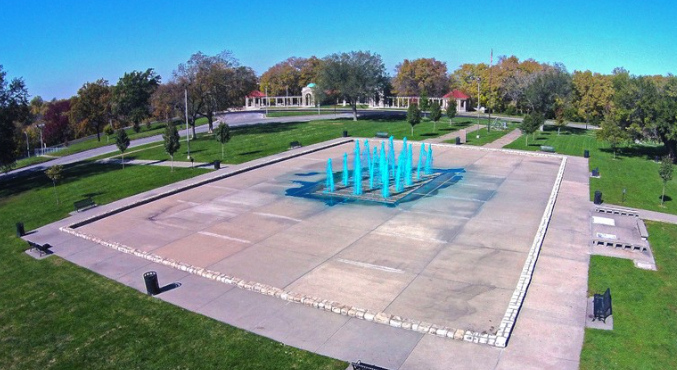
If you’ve ever seen Kansas City’s fountains transformed into a vibrant shade of blue, pink, or even teal, you might wonder how—and why—it happens. As it turns out, there’s more than just a splash of color involved! Here’s how (and why) our fountains get dyed!
When Can Fountains Be Dyed?
Each year (typically between April 20 and October 15, per KC Parks guidelines), a select few of Kansas City’s most popular fountains become colorful canvases for community causes and citywide celebrations. These fountains include:
- Concourse Fountain
- Northland Fountain
- Children’s Fountain
- The Fountain at Mill Creek Park
- Spirit of Freedom Fountain

These beloved landmarks can be dyed in colors like:
- Blue
- Green
- Red
- Pink
- Teal
- Orange
- Gold
This adds a whole new level of vibrancy to the Kansas City landscape.
But there’s a catch—only non-profit organizations or citywide events can apply, and KC Parks has set guidelines to make sure it’s all done thoughtfully.
Why Dye a Fountain?
Dyeing a fountain isn’t just about adding a pop of color. It’s a visual statement, a celebration, or a tribute to a cause that matters to Kansas Citians. Each hue is chosen to represent a specific cause, from supporting local charities to celebrating citywide events, and the colorful transformation is impossible to ignore. When you see a pink fountain, you know there’s a reason behind it!

The Science Behind Fountain Dye
Wondering what kind of dye it takes to turn these fountains such vivid shades? Here’s where it gets interesting! Blue Valley Laboratories, a local company specializing in water treatment, creates all of the fountain dye. Each color—blue, green, red, pink, purple, teal, orange, gold, and black—is essentially like food coloring, minus the certification process since it’s not for consumption.
Just one gallon of dye can color about 1,000 gallons of water. For the Fountain in Mill Creek Park (aka J.C. Nichols Memorial Fountain), holds around 70,000 gallons. It takes a whopping 70 gallons of dye to achieve that brilliant blue! The entire process is overseen by a chemist, who makes sure each fountain has the perfect amount of dye for its volume.
Here’s How It Works!
To keep things organized, each non-profit or city event must stick to a single color that’s unique to their cause. And once a fountain is dyed, it stays that color for up to 10 days. The guidelines ensure that no two organizations use the same color in the same season, giving each cause its own special time to shine.
For a fountain to switch colors, it must run clear for two days between dyeings, so each transition is clean and beautiful. Want a custom shade? Blue Valley Laboratories can create it, but it’ll take a little extra time (and funds!).

The Cost of Dyeing a Fountain?
The price for adding a splash of color? $1,000 per fountain for the first day, and $250 for each additional day. And if your event falls on a weekend or holiday, extra staffing costs apply. All funds go directly to KC Parks’ “Wish Upon a Fountain” foundation, which is dedicated to the maintenance and restoration of the city’s fountains. This way, every dollar helps keep Kansas City’s fountain legacy alive.
Interested in Dyeing a Fountain?
If you’re part of a non-profit or organizing a citywide celebration, dyeing a fountain is an eye-catching way to make your cause known! And now, every time you spot a fountain glowing in a unique shade, you’ll know it’s more than just color—it’s community pride, chemistry, and Kansas City’s tradition all coming together in a splash of beauty.
So, next time you’re strolling by The Fountain at Mill Creek Park (formerly the J.C. Nichols Memorial Fountain) or the Children’s Fountain and see a surprising hue, give a nod to the cause and the chemist who made it happen. That colorful fountain is pure Kansas City magic! So now you know how (and why) our fountains get dyed!